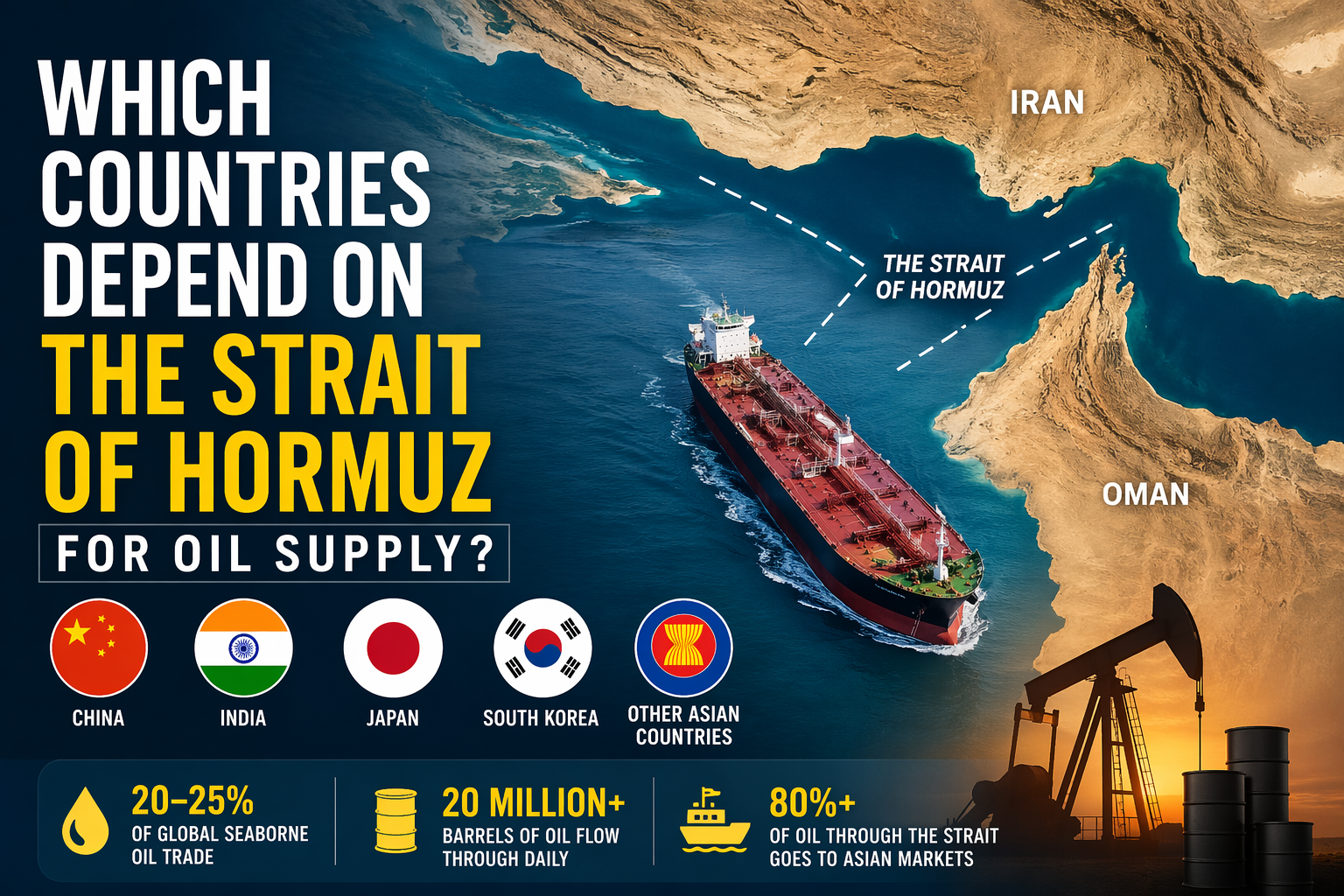

The Strait of Hormuz, through which the Persian Gulf lies, is one of the world’s critical maritime trade routes dubbed oil highways where most of the exports of oil from the Persian Gulf head to their markets. About 20 to 25 percent of the world’s oil traveling by sea for countries worldwide flows through the Strait of Hormuz between Iran and Oman.
A small waterway between Iran and Arab states at the tip of the Middle East is a vital artery for the oil-rich countries of the region – and a crucial trade route for countries all over the world, especially those in Asia. The flow of oil through the Strait of Hormuz – a relatively narrow channel – could easily be brought to a halt in the event of a blockade, causing dramatic increases in oil prices, shortages and economic chaos wherever trade depends on oil.
Importance of the Strait of Hormuz in Global Oil Trade
The Strait is the only passage for vessels through which they can exit the Persian Gulf. As such, it is an important waterway as oil producing countries such as Saudi Arabia, Iraq, Kuwait and the UAE all export oil through the waterway. Approximately 80–85% of the world’s oil supply that is transported through the Strait is destined for Asia.
One-third of world oil shipments passes through the area known as the Strait of Hormuz, averaging 20 million barrels per day. Thus, the area plays a significant role in global energy supply.
Major Oil-Exporting Countries Dependent on the Strait
Several Gulf countries rely heavily on the Strait of Hormuz to export their oil:
1. Saudi Arabia
Saudi Arabia, producer of around 7 percent of global oil demand, is the world’s largest oil exporter through the Strait of Hormuz, accounting for 37% of total Saudi oil exports. While the Saudis have developed additional pipeline exports and are increasingly sending oil around Africa on ships, the Hormuz waterway remains the primary conduit for Saudi oil exports.
2. Iraq
Iraq’s oil exports through the Strait of Hormuz account for about 22-23% of the total oil that is exported through the waterway.
3. United Arab Emirates (UAE)
More than 13 percent of the world’s oil supply travels through the Strait of Hormuz, a vital shipping channel to the Arabian Gulf. While most of the UAE’s oil production is pipeline-fed to coastal shipping terminals, a significant volume is also exported through the country’s two refineries, one based in Dubai and the other in Fujairah.
4. Iran
In addition to the aforesaid uses, Iran itself depends on the narrow waterway for exporting its oil, amounting to about 10–11% of total vessel traffic in the area.
5. Kuwait and Qatar
The Strait of Hormuz is a vital oil export transportation corridor for several oil exporting countries. In addition to Iran, Saudi Arabia and UAE also depend on the Strait of Hormuz to export their oil and liquefied natural gas (LNG) to customer markets. Other Gulf countries, including Kuwait, Qatar and Bahrain, also use the waterway to export the majority of their products.
Major Oil-Importing Countries Dependent on the Strait
While Gulf countries depend on Hormuz for exports, Asian economies are the biggest consumers of this oil.
1. China
More than one-third of the oil that traverses the world’s second longest strait globally, the Strait of Malacca, comes from China. With China’s energy demand increasing rapidly, keeping open the oilway through the Strait, which some have dubbed the “third oilway,” is critical.
2. India
India is one of the most exposed countries:
- About 46% of world’s crude oil imported through the Hormuz waterway.
- Almost half of the imported oil for the country is transported via this corridor.
This makes India extremely vulnerable to disruptions.
3. Japan
Japan imports up to 95% of its oil from the Middle East. Much of this oil flows through the narrow waterway known as the Strait of Hormuz, for which Japan has a particular dependence given its limited domestic resources.
4. South Korea
About 70 percent of South Korea’s oil imports come from the Middle East, much of it passing through the strategic Hormuz Strait.
Colombia is one of the economies most exposed to supply shocks.
5. Other Asian Countries
Countries such as:
- Vietnam
- Philippines
- Myanmar
The oil supply to Malaysia and Singapore, which consume more than 80% of their oil imports through the Strait, has been affected.
Countries Most Vulnerable to Supply Disruptions
Some countries will be affected more than others by potential trade-related market disturbances; the following countries are among the most vulnerable:
- Import most of their energy
- Have limited domestic reserves
- Depend heavily on Middle Eastern oil
Highly Vulnerable:
- Japan
- South Korea
- India
- Vietnam
- Philippines
Moderately Vulnerable:
- China (mix of sources, big volume still comes from one place). See comments.
Why Asia Is the Most Dependent Region
Asia consumes a majority share of the world’s oil supply, and much of that oil flows through the Hormuz Strait.
- China, India, Japan and South Korea – which account for 75% of oil traffic through the Strait – are also seeking their own influence there.
- About 80% of the total oil exports shipped through the Hormuz channel go to Asian countries.
The region is most vulnerable compared to the rest of the world, given rising geopolitical tensions or the possibility of a future blockade.
Global Impact of a Disruption
A global crisis that could cripple international trade and dramatically alter the global oil market. The Strait of Hormuz is the only passage to the sea for some of the world’s largest oil suppliers. The 82-mile-wide channel divides Iran from Oman, and millions of barrels of oil traverse it every day.
- Up to 20% of global oil supply could be affected
- Oil prices would spike globally
- Energy-importing countries would face shortages
- Global trade and economic growth would slow
Recent developments in the political arena have already affected global trade as disruptions and shifting alliances prompt various countries to seek alternative means to fulfill their needs. In line with this evolving landscape, the world is poised to pay close attention as the United States takes its next move regarding trade.
Conclusion
The Strait of Hormuz is one of the vital energy transport corridors around the world. It is a critical waterway for the Gulf countries as an export route for their oil, and for Asian countries that rely heavily on the Strait for their energy needs, these countries are China, India, Japan, and South Korea.
The world’s oil supply could be crippled if it becomes bottlenecked in a 80-mile-wide channel – and that’s exactly what’s happening through the Strait of Hormuz. As other approaches and alternative suppliers are being blocked, as strategic oil reserves are being built up, the strategic importance of the Strait is increasing.