
Introduction to the Phenomenon
Melting ice from glaciers and polar ice sheets is redistributing Earth’s mass at an unprecedented rate, altering the planet’s balance and dynamics. As global temperatures rise due to climate change, trillions of tons of ice melt into the oceans, causing subtle but significant shifts in Earth’s weight distribution. This process not only affects sea levels but also influences the planet’s rotation and axis, with measurable impacts on daily life and the environment.
The Science Behind Mass Redistribution
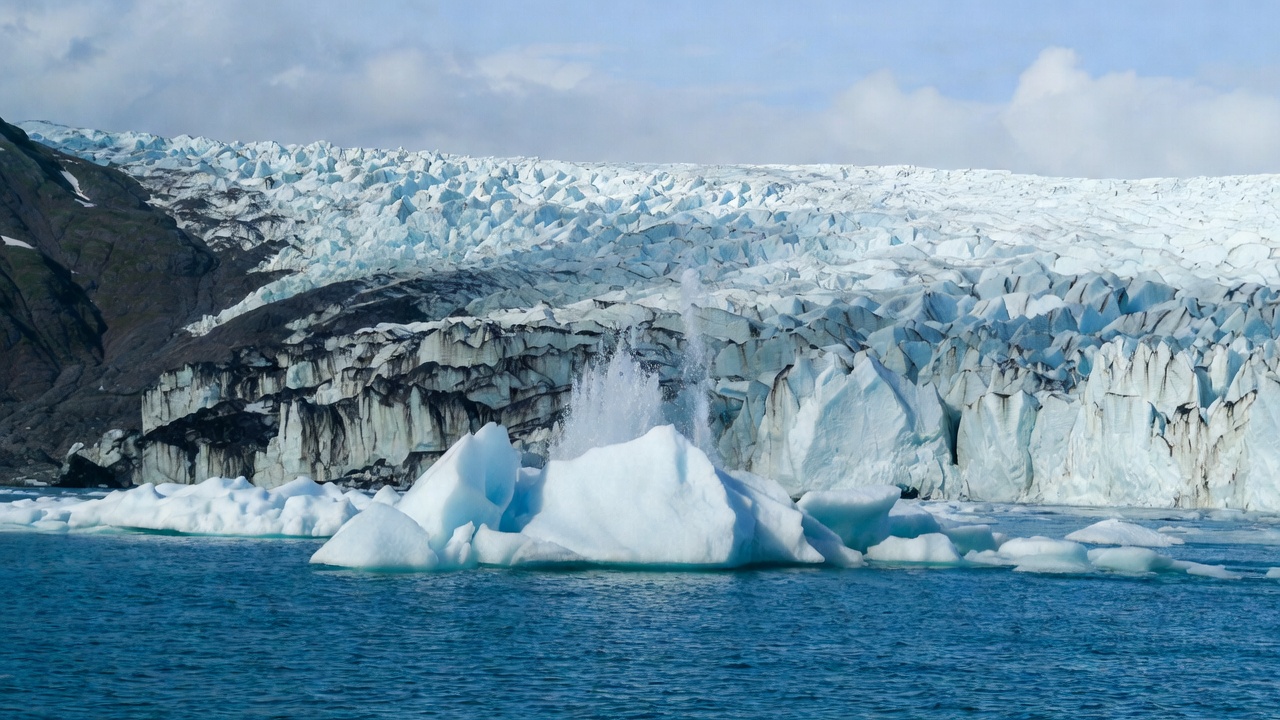
When ice melts, water from land-based glaciers flows into the oceans, changing how mass is distributed across Earth’s surface. For instance, Greenland’s ice sheet has lost over 5 trillion tons since 2002, while Antarctica has shed about 2.7 trillion tons in the same period, leading to a net transfer of weight from poles to equator. This redistribution acts like a figure skater extending arms to slow spin, modifying Earth’s moment of inertia and gravitational field.
Impact on Earth’s Rotation Speed
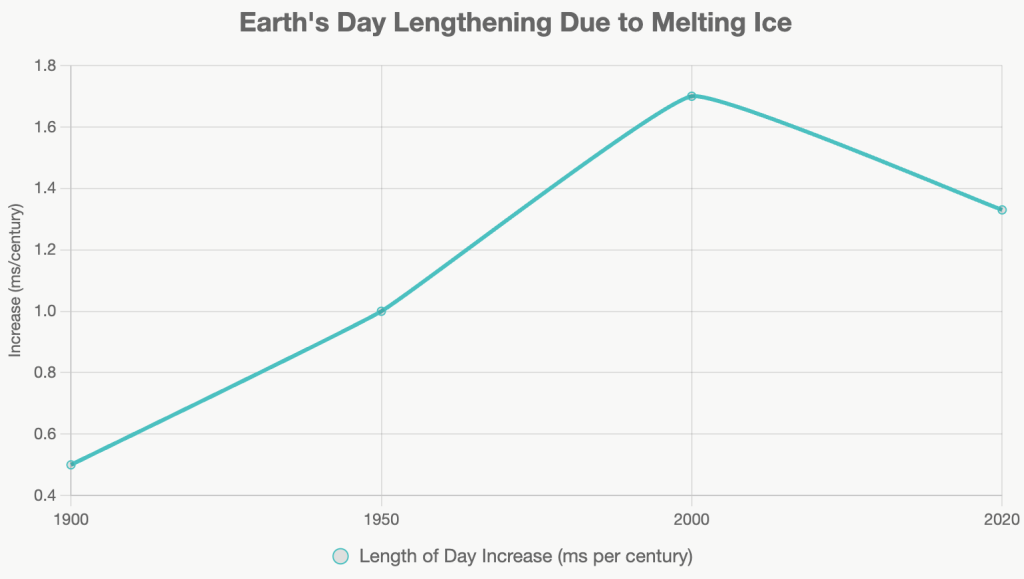
Melting ice is slowing Earth’s rotation, lengthening the day by redistributing mass. Historical data shows the day has lengthened by 1.7 milliseconds per century, but recent melting has accelerated this to 1.33 milliseconds per century since 2000. This shift could require a negative leap second by 2029, affecting timekeeping systems like GPS and stock exchanges.
Shifts in Earth’s Axis
The melting causes Earth’s polar axis to wobble and shift, known as polar motion. Since the 1990s, the axis has drifted 4 meters eastward due to ice loss, with Greenland’s melt contributing 7.6 millimeters of sea level rise and altering the axis by 2.6 centimeters per year. This is compounded by post-glacial rebound, where land rises after ice weight is removed, further tilting the planet.
Effects on Sea Levels and Gravity
Sea level rise is not uniform; melting polar ice raises levels more at the equator than poles due to gravitational changes. Antarctica’s melt could raise global sea levels by 58 meters if complete, but local effects vary, with some regions like the Pacific seeing 20–30% higher rise. Gravity decreases near melting areas as mass moves, causing relative sea level drops in some spots.
Post-Glacial Rebound
As ice melts, relieved land rises (isostatic rebound), shifting mass and contributing to axis changes. In Hudson Bay, land rises 1 cm per year, while Antarctica’s rebound could reduce sea level rise estimates by 0.5 mm annually. This rebound has accelerated Earth’s rotation slightly in recent years, countering some slowing effects.
Scientific Evidence and Data
Studies from NASA and GFZ show melting ice has shifted Earth’s axis by 10 meters since 1900, with 90% of polar motion since 2000 due to ice loss and groundwater depletion. Satellite data from GRACE mission indicates 150 gigatons of ice lost yearly from Antarctica, altering rotation by 0.6 milliseconds per decade.
Implications for Human Life
These shifts could impact GPS accuracy, requiring adjustments, and alter earthquake patterns by changing crustal stress. Sea level changes threaten 680 million coastal residents, with 230 billion tons of annual melt adding 0.7 mm to global levels. Longer days might affect agriculture and ecosystems, emphasizing the need for climate action.
Final Thoughts
Melting ice is profoundly reshaping Earth’s physical properties, from rotation to axis tilt, with cascading effects on sea levels and gravity. With 1.2 trillion tons lost from Greenland alone since 1992, urgent mitigation is essential to stabilize the planet’s balance.