
Introduction: Why the 1.5°C Threshold Matters
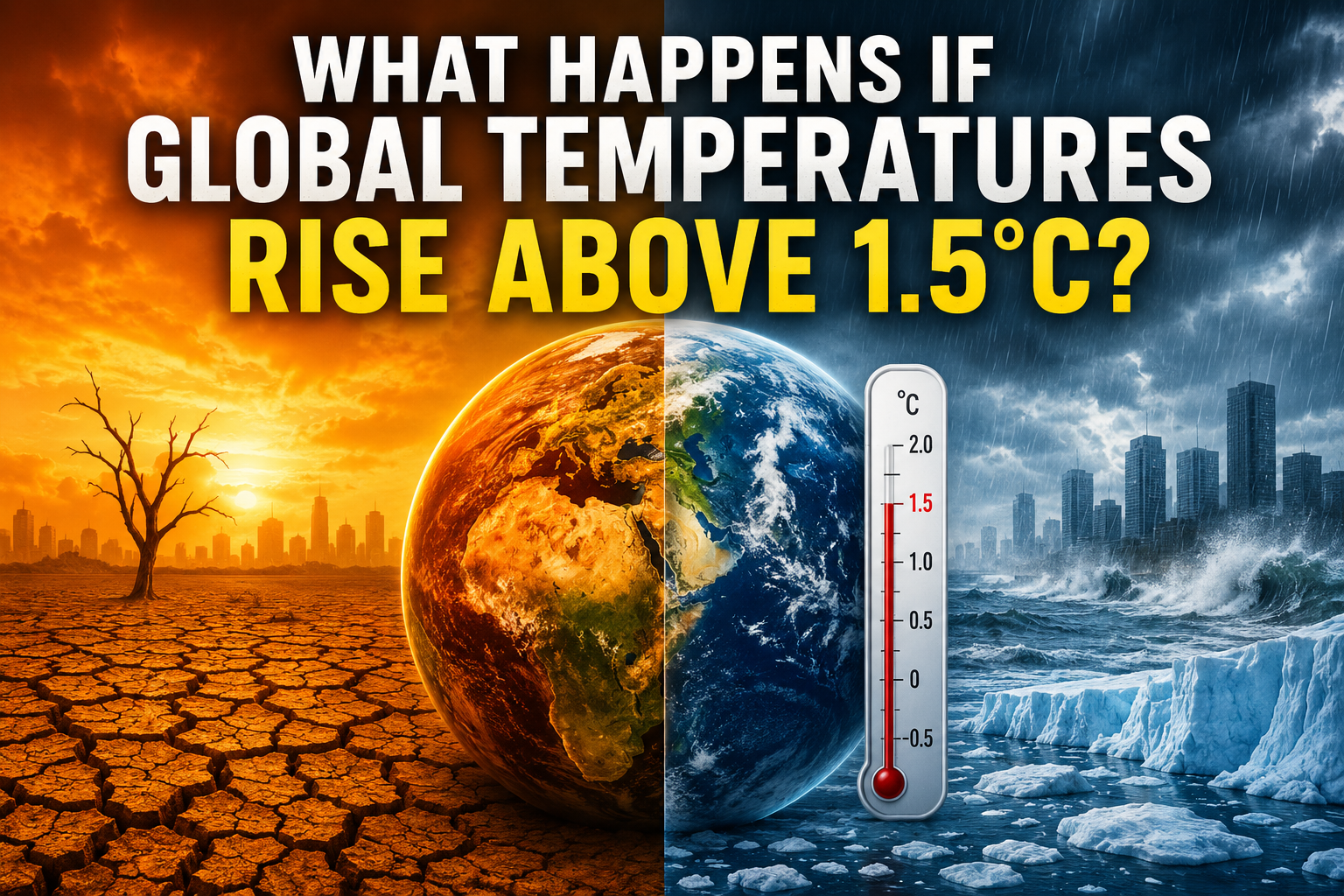
Limiting global warming to 1.5°C is becoming increasingly important for climate change research and for the climate change policies of countries worldwide. The temperature of 1.5°C is calculated by comparing the current average surface temperature of the Earth with the average surface temperature from the period 1850 to 1900, which is used as a reference point for pre-industrial times. The 1.5°C target was brought to the attention of the public by the Paris Agreement adopted by nearly every country in the world in 2015. In this agreement, all countries agree to make every effort to keep temperature increase to 1.5°C while specifying that increase should be kept well below 2°C.
1.5°C is not a hard and fast “tipping point” after which all of a sudden the Earth will become catastrophically overheated and start to burn down around us. Rather, every additional fraction of a degree of warming will bring with it a host of greater and greater risks for extreme weather, for collapse of ecosystems and for other disasters as temperatures continue to rise. The more the Earth’s surface temperature goes above 1.5°C of warming above pre-industrial levels the greater the risk of a range of serious impacts including sea-level rise, food shortages and water shortages for billions of people and resulting economic damage. These are the conclusions of the Intergovernmental Panel on Climate Change (IPCC), the leading international scientific body assessing climate change.
Understanding Current Global Warming Trends
Human activities, most notably the burning of coal, oil and natural gas, have already caused the Earth to warm by approximately 1.2 °C to 1.3 °C above pre-industrial levels. Concentrations of carbon dioxide in the atmosphere have increased to levels not seen for millions of years and have recently exceeded 420 ppm.
The past decade has been the warmest on record and in recent years new temperature records for the whole world have been set again and again. Climate models calculate that without a sudden reduction of greenhouse gases the temperature might even temporarily or permanently exceed the 1.5°C threshold in the 2030s. Recently some years have already reached 1.5°C for a short time. However, the Paris threshold is a long-term average and not a value for single years.
More Frequent and Intense Heat Waves
Exceeding 1.5°C could lead to more extreme heat events in the future. The number of severe heat events, traditionally considered to occur every 50 years, would increase by a factor of 9 at 1.5°C of warming. However, the number of extreme heat events would increase even more with higher levels of warming.
At 1.5°C of global warming, extreme heat events would lead to severe heat-waves (as defined here) that historically would have occurred every 50 years or so to occur approximately 9 times more often. However, the increase in frequency and in severity with further warming is considerable, and so too are the impacts on urban populations.
Prolonged exposure to higher temperatures can increase the incidence of heat-related illnesses such as heat exhaustion and heat stroke. Heat can also increase the risk of serious health effects from pre-existing conditions such as heart and respiratory diseases. Populations particularly vulnerable to extreme heat include the elderly, young children, outdoor workers, and low-income communities living in poor quality and overcrowded housing. The number of heat-related deaths and illnesses are projected to increase across regions of South Asia, the Middle East, Africa, Southern Europe, and parts of North America.
Rising Sea Levels and Coastal Flooding
One of the most visible long-term impacts of exceeding 1.5°C are the higher sea levels. As the planet warms, all of the world’s glaciers and ice sheets are melting as well as the volume of the ocean increasing due to its thermal expansion.
The amount of sea level rise for the 21st Century depends on future emissions but is projected to be between 0.3m and 1m by 2100. It is further to note that even after temperatures cease to rise, it will take centuries for the oceans and ice sheets to return to their pre-indicted state as they respond slowly to temperature changes.
The margin between 1.5°C and 2°C of global warming could put millions more people at risk of coastal flooding. Already exposed to occasional extreme events, the flooding of low-lying coastal areas and the resulting erosion, will become more the rule than the exception for cities such as Miami (USA), Jakarta (Indonesia), Bangkok (Thailand), Alexandria (Egypt), Lagos (Nigeria), Shanghai (China) and Mumbai (India). Flooding of tidal areas, flash- flood events and sea-level rise could lead to the displacement of the inhabitants of small island developing states in the Pacific and the Indian Ocean, possibly even to their permanent relocation.
Increasing Threats to Food Security
Agriculture is one of the sectors most sensitive to changes in temperature and to rainfall, both regular and extreme. When temperatures continue to rise above 1.5°C, farmers and herders from around the world will face greater difficulties in increasing production of their crops and livestock.
Temperatures above average can lead to lower yields of wheat, maize, rice and soybean. As soon as temperatures are extreme for a longer period, crops can even be lost completely due to heat stress. Crop development can be affected as well as pollination. Furthermore, droughts are becoming more extreme and even more frequent in some parts of the world, whereas in other parts of the world heavy rainfall and floods are causing damage to crops.
Impacts are being seen on fisheries and their ecosystems as oceans continue to warm, changing where fish can find food and affect new places to which they migrate. This, and the continued degradation of coral reefs (critical habitats for many species of fish that support millions of people through food and livelihoods) affect fish populations and can lead to decreased stocks of food.
Consequences for the world’s food supply, higher food prices and new threats of hunger for already poor people and countries in which climate change already is creating serious problems.
Water Scarcity Becomes More Severe
As global temperatures continue to rise above 1.5°C, water availability is expected to decline in many regions of the world. Changes in the precipitation regime, reduced snowpack, glacier loss, and increased evaporation will lead to water stress.
Glaciers function as natural storage facilities for large quantities of water. The loss of these reserves on a continuing scale puts the supply of fresh water for consumption for hundreds of millions of people at risk. This affects regions around the globe such as the Himalayas, the Andes, the Alps as well as the Rocky Mountains.
Future declines in runoff during critical periods could reduce the water available for human consumption, irrigation of crops, for hydropower generation and for the needs of industry. Regions currently experiencing water stress—parts of Africa, the Middle East, Central Asia, and the western United States—are expected to face even greater difficulties as temperatures exceed 1.5°C.
Coral Reefs Face Near-Total Collapse
Coral reefs are among the most sensitive ecosystems to rising temperatures. Even a slight rise in temperature can cause coral bleaching, a process where the coral expels the alga that the coral needs to survive.
Tropical coral reefs are estimated to collapse by 70% to 90% at 1.5°C of global warming above pre-industrial levels, and more than 99% at 2°C.
The loss of coral reefs will impact Marine Biodiversity, Fisheries, Tourism and the Protection of Coasts. Hundreds of millions of people will be affected in some way as they rely on the coral reef ecosystems for food and income as well as for protection against storms.
Greater Risks of Biodiversity Loss
Already, plants and animals from all parts of the world are reacting to climate change. Some already are moving to new parts of the world, changing their patterns of migration, or changing the times at which they breed. But as global temperatures continue to rise, above 1.5°C, it seems likely that many species will not be able to adapt as fast as the climate changes.
Studies forecast that at 2°C more species than at 1.5°C will lose more than half of their potential habitat. This threat affects forests, wetlands, grasslands, tundra as well as marine ecosystems.
Biodiversity loss is not only a matter for animals and plants. The ecosystems that are losing their biodiversity also provide humans with a range of vital services. The decline of these services has serious consequences for human health and for the economy. These services include pollination, water purification, carbon storage, fertile soils and disease control.
More Powerful Storms and Extreme Weather
As atmosphere warms, it can hold more moisture and this condition creates very intense events of heavy rain falls and brings more frequent and severe instances of flooding. On other hand, more warm conditions create instances of more droughts and wildfires.
Tropical cyclones, hurricanes and typhoons may increase in intensity including the amount of rainfall and the strength of storm surges. In some parts of the world such as California, Canada, Australia, southern Europe and parts of South America, the periods of wildfires may be longer and more destructive due to climate change.
As climate change events continue to intensify, their costs to local and global economies continue to rise. When powerful disasters hit, the destruction of infrastructure, houses, transportation systems and power supplies places a huge strain on governments, businesses and individuals.
Human Health Impacts Intensify
Climate change affects health in a number of ways, affecting not just heat related illness but also air quality, increasing exposure to allergens and facilitating the spread of insects which can spread disease to new areas.
Some examples of diseases spread by mosquitoes that are currently affecting large populations could spread to new parts of the world, including dengue fever, malaria and chikungunya. Flooding can also pollute the water supply and cause the spread of water-borne diseases.
The mental health impacts of climate change are also beginning to be recognized. As extreme weather events and environmental degradation affect local communities in different ways, people experience increased levels of anxiety and depression and develop trauma-related disorders as a result of having been displaced, losses incurred and other stresses felt.
Economic Consequences of Exceeding 1.5°C
In addition to the impacts already mentioned, further warming above 1.5°C also has serious economic impacts for sectors such as agriculture, tourism, fisheries, insurance, public health, transport, and energy supply.
Damage from climate-related disasters already runs into hundreds of billions of U.S. dollars per year worldwide. The costs are likely to increase with rising temperatures. In addition to losses from extreme weather, the damages include reduced productivity due to heat, damage to infrastructure, and disruptions to global value chains.
Developing countries face the greatest economic difficulties. In these countries there is not enough money to adapt to changing conditions and to recover from the consequences of natural disasters, even though these countries are not responsible for the high levels of greenhouse gases in the atmosphere that cause climate change.
Climate Tipping Points Become More Likely
There are several points of no return for our Earth system that scientists are very worried about. Once these so-called tipping points are passed, irreversible environmental changes will take place within a matter of years or decades.
Potential tipping points are large ice sheets in Greenland and Antarctica, vast areas of permafrost in the Arctic, the major ocean circulation systems (e.g. the Atlantic Meridional Overturning Circulation) and the remaining vast areas of forests in the Amazon basin that could collapse in a self-reinforcing way and can not be reversed on human timescales once the switch has been triggered.
While uncertainties remain as to when these changes will occur, the higher the temperature the more likely these irreversible changes will be triggered.
Can the Impacts Still Be Limited?
While exceeding 1.5°C of warming does not leave much room for hope to prevail, every additional tenth of a degree can be prevented and thus reduced in its impact on climate change. To this end, a swift reduction of greenhouse gases is required – also with a view to potential future damages and to facilitate adaptation.
Expanding renewable energy, increasing energy efficiency, protecting forests, restoring damaged ecosystems, switching to electric vehicles, reducing methane emissions and climate-resilient infrastructure are some of the most effective measures to limit climate change impacts in the future.
In addition to mitigation measures there are also many opportunities for adaptation. For instance strong flood defense systems, urban design that can stand high temperatures, drought resistant crops and emergency response programs to name a few. These can help to reduce risk when climate change impacts cannot be avoided.
P.S.: Why Every Fraction of a Degree Matters
Rising global temperatures above 1.5°C have serious consequences for our planet that go beyond a number of very hot days. Extremely hot temperatures can become life threatening, sea levels are expected to rise even further leading to more food and water insecurity, the collapse of ecosystems and the loss of biodiversity. Extreme weather events, such as tropical storms, are expected to occur more frequently and become more extreme. A number of new health risks emerge and there will be substantial economic losses. While 1.5°C is not a cliff edge, the point does represent a threshold of serious consequences for our planet that become more extreme and more widespread the higher temperatures go.
There is extensive scientific evidence that shows that reducing climate change to as low a level as possible is one of the greatest challenges for humanity today. The decisions that governments, companies, and individuals take within this decade will determine the extent and distribution of climate change impacts in the 21st century and beyond. Any action that reduces emissions and supports adaptation can protect people, ecosystems and future generations from a rapidly escalating series of risks associated with a changing climate.