

The Earth’s magnetic field acts as an invisible shield, protecting life from harmful solar radiation and guiding migratory animals across vast distances. But what if this field were to reverse itself, swapping north and south magnetic poles? This phenomenon, known as a geomagnetic reversal, has occurred hundreds of times throughout Earth’s history. The last major reversal happened approximately 780,000 years ago, and given the irregular intervals between such events, many scientists wonder if we’re due for another. This article dives deep into the science behind Earth’s magnetic field, the evidence for past reversals, the mechanisms that drive them, the current state of the field, and the potential implications of a future flip. By the end, you’ll have a comprehensive understanding of this dynamic planetary process.
Understanding Earth’s Magnetic Field
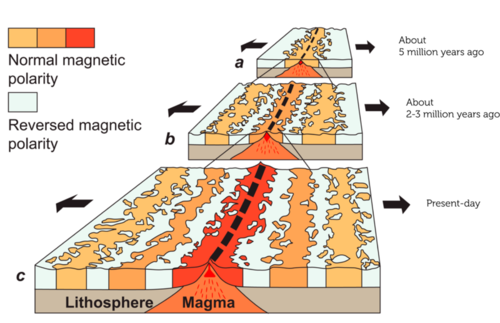
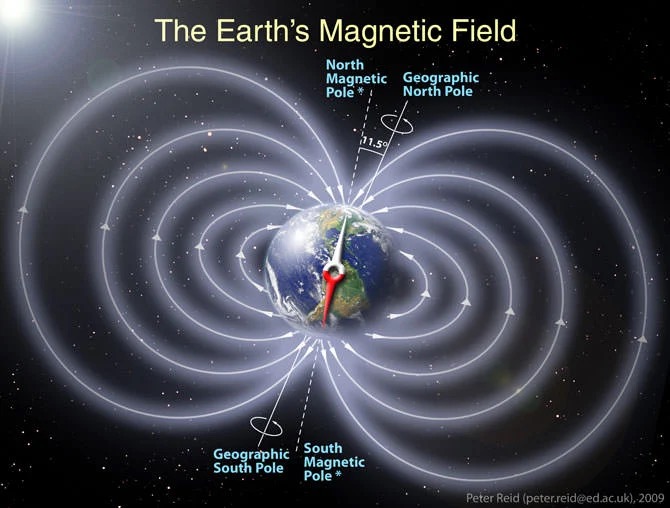
Earth’s magnetic field is generated by the movement of molten iron and nickel in the planet’s outer core, a process known as the geodynamo. This convective motion creates electric currents, which in turn produce a magnetic field that extends from the core through the mantle and into space. The field resembles that of a bar magnet tilted at about 11 degrees from Earth’s rotational axis, with magnetic lines flowing from the geographic South Pole (magnetic north) to the geographic North Pole (magnetic south).
The strength of the field varies, averaging about 25 to 65 microteslas at the surface, and it plays crucial roles:
- Protection from Solar Wind: It deflects charged particles from the Sun, preventing atmospheric erosion and reducing radiation exposure.
- Navigation Aid: Animals like birds, sea turtles, and bees use it for migration, while humans rely on it for compasses and GPS systems.
- Auroras: Interactions with solar particles create the Northern and Southern Lights.
However, the field is not static. It undergoes secular variation (slow changes over decades) and excursions (temporary shifts without full reversal). Full reversals are more dramatic, where the dipole field flips polarity over thousands of years.
To visualize this, consider the following diagram of Earth’s magnetic field during normal and reversed polarity:
What Is a Geomagnetic Reversal?
A geomagnetic reversal, or polarity flip, occurs when the Earth’s magnetic north and south poles swap places. During a reversal:
- The dipole component of the field weakens to about 10% of its normal strength.
- The field becomes multipolar (multiple poles emerge temporarily).
- After the transition, polarity stabilizes in the opposite direction.
Reversals are not instantaneous; paleomagnetic data from ocean floor sediments and volcanic rocks show they take 1,000 to 10,000 years, though some estimates suggest up to 22,000 years for the last one. The transition period leaves Earth with a weakened field, making it more vulnerable to cosmic rays.
Unlike a sudden “flip,” the process is gradual. The field doesn’t “turn off” completely but becomes chaotic, with poles wandering erratically before settling.
Here’s a schematic illustrating the reversal process:
Historical Evidence of Reversals
Evidence for reversals comes from paleomagnetism—the study of magnetic minerals in rocks that “lock in” the field’s direction at the time of formation.
- Ocean Floor Records: As tectonic plates spread at mid-ocean ridges, new crust forms with magnetic stripes parallel to the ridge. These stripes alternate in polarity, forming a “barcode” pattern discovered in the 1960s. The pattern is symmetric on both sides, confirming reversals.
- Volcanic Rocks: Lava flows record the field in iron-rich minerals like magnetite. Analysis of global lava databases shows 183 reversals in the last 83 million years.
- Sediment Cores: Lake and ocean sediments preserve continuous records. For example, the Laschamps Excursion ~41,000 years ago (a near-reversal) is documented in tree rings and ice cores via increased cosmogenic isotopes like beryllium-10.
Reversals occur randomly, with an average interval of ~450,000 years, but clusters exist (e.g., superchrons with no flips for millions of years). The current Brunhes Chron (normal polarity) has lasted 780,000 years—long but not anomalous.
A timeline of major reversals:
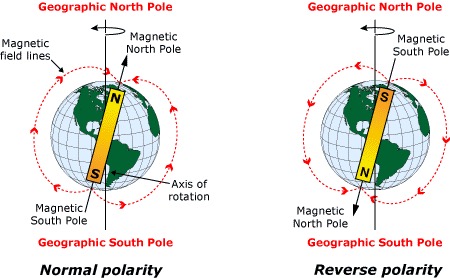
Plate Tectonics and the Magnetic Field
Causes and Mechanisms of Reversals
The geodynamo is chaotic, driven by:
- Core Convection: Heat from the inner core and radioactive decay causes molten outer core to convect, generating currents.
- Coriolis Effect: Earth’s rotation twists these currents into helical patterns, sustaining the field.
- Chaotic Dynamics: Numerical simulations show the field can destabilize when convection patterns shift, leading to dipole collapse and reversal.
Triggers might include:
- Core-Mantle Interactions: Heat flow variations at the boundary disrupt dynamo stability.
- Solar Activity: Minimal influence, but excursions like Laschamps coincided with solar minima, amplifying effects.
- No External Cause: Reversals are intrinsic to the dynamo’s self-sustaining but unstable nature.
Models predict reversals aren’t predictable short-term but occur when field strength drops below a threshold (~10% normal).
Current State and the Possibility of a Future Reversal
The field has weakened ~10% since 1840, with the South Atlantic Anomaly (a weak spot) growing 5-10% per decade. Magnetic north drifts ~55 km/year toward Siberia, prompting 2025 World Magnetic Model updates.
Is a reversal imminent?
- No: Weakening is within normal variation (field fluctuated similarly in past without flipping). Odds of reversal in next centuries are low (~0.06-0.08 probability for overdue flip).
- Overdue?: Average interval 450,000 years, but randomness means 780,000-year Brunhes isn’t unusual.
- Timeline: If starting, full flip could take 1,000-22,000 years, with weakened field persisting centuries.
Potential Impacts of a Reversal
During transition (weak field):
- Increased Radiation: Solar wind/cosmic rays penetrate more, raising cancer risks and damaging satellites/electronics.
- Navigation Disruptions: Compasses/GPS fail; animals disoriented (e.g., bird migrations collapse).
- Environmental Effects: Ozone depletion from cosmic rays could cause climate shifts, extinctions (e.g., Laschamps event ~42,000 years ago linked to megafauna die-offs).
- No Doomsday: Past reversals didn’t cause mass extinctions; atmosphere provides backup protection. Modern tech (shielded grids, satellites) would adapt.
Conclusion
Earth’s magnetic field will almost certainly flip again—it’s a natural part of the geodynamo process, with evidence from millions of years of geologic records. However, a reversal isn’t imminent; the current weakening is likely a normal fluctuation, not a prelude to a flip. When it does happen, the process will span thousands of years, giving humanity time to prepare for increased radiation and navigation challenges. Ongoing satellite missions like Swarm continue monitoring, ensuring we stay ahead. Understanding these reversals not only unravels Earth’s deep interior but also highlights the dynamic nature of our planet’s protective shield.