
Our world is rapidly changing as it becomes more urbanized than it has ever been before. In the year 2026, a massive number of people reside in a collection of very urban and very crowded cities from across the globe. In the future years ahead, these so-called ‘Megacities’ will continue to expand at an alarming rate with most emerging in areas of Asia, Africa, and Latin America. Much of the future growth is likely to occur within currently urbanized regions. A large proportion of the rapidly growing populations are expected to reside within the confines of already over-populated and very densely populated metropolitan cities. The future urban population will continue to represent the core of the human identity and by 2050 it is projected that an astonishing 68% of the world’s population will reside in cities globally.
Cities have become economic engines and places of residence and opportunity for billions of people. However, the rapid growth of urban populations has created problems with the availability of adequate housing, traffic and transportation, environmental pollution, the provision of basic infrastructure and services, such as safe water, sanitation, health services and other urban needs. While some cities, such as Jakarta, Dhaka, Delhi, Shanghai, and Tokyo, are home to tens of millions of people living in relatively small spaces, other cities of the world are facing problems of traffic congestion, of rising property value increases, of water shortages, of over crowded public transportation, and a host of other environmental issues.
This article explores the world’s most crowded cities, how they are evolving and what are the challenges that arise from a very high density of population living in a limited space and growing.
What Makes a City “Crowded”?
When we talk about crowded cities, it is generally accepted to refer to two figures: the total size of the metropolitan population and the population density of the area. While large metropolitan areas with huge numbers of citizens covering a vast surface exist, as in the case of megalopolises, there are many other cities where the immense population is compacted into a very small area with huge density.
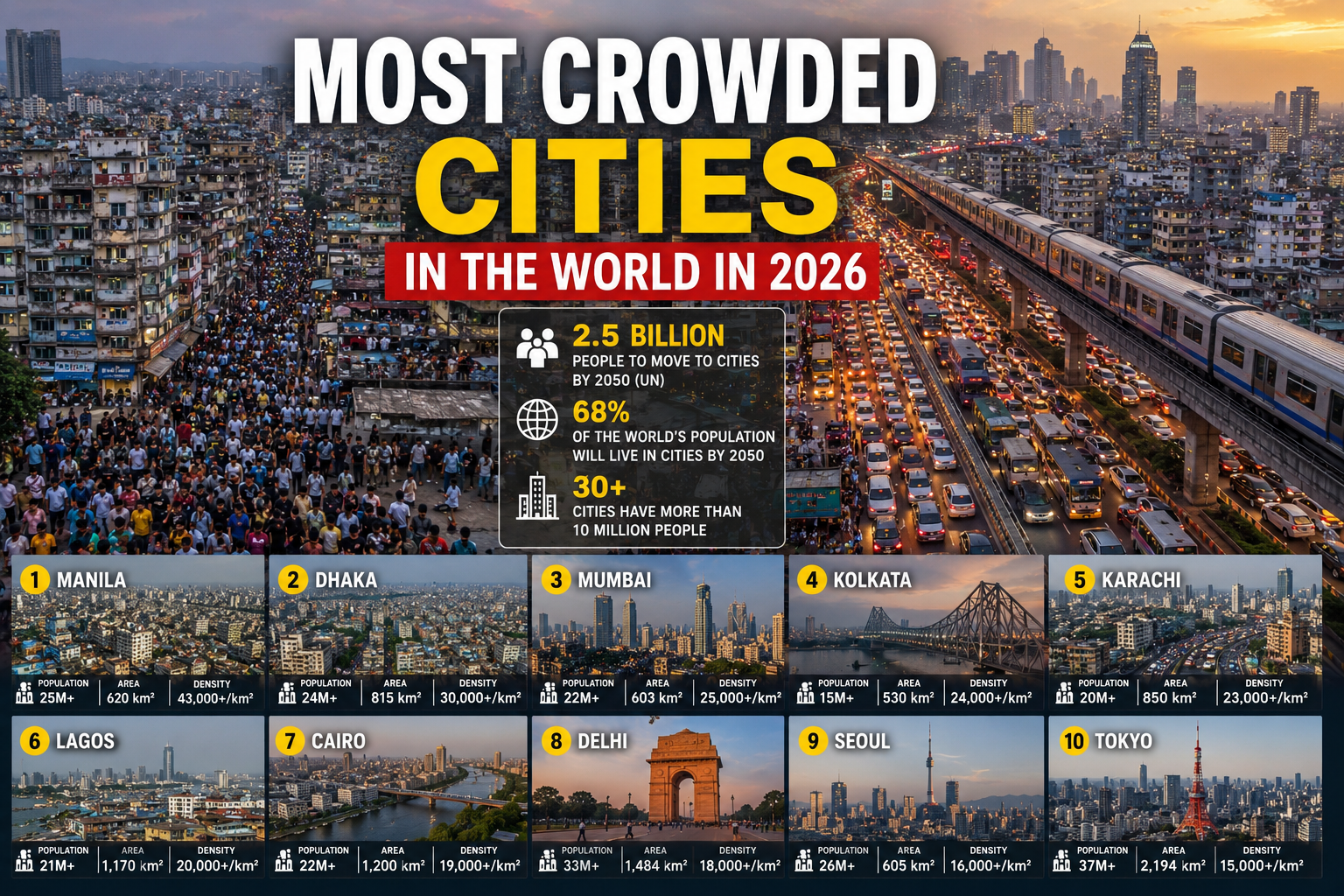
Urban researchers define ‘megacities’ as urban areas with a population of more than 10 million people. The number of megacities has exponentially increased in the last decades. Recently the UN published new data on urban populations. It states that already more than 30 cities have a population of over 10 million people. Just in 1975 there were 8 cities with such a huge population (urban residents).
Top Most Crowded Cities in the World in 2026
1. Manila
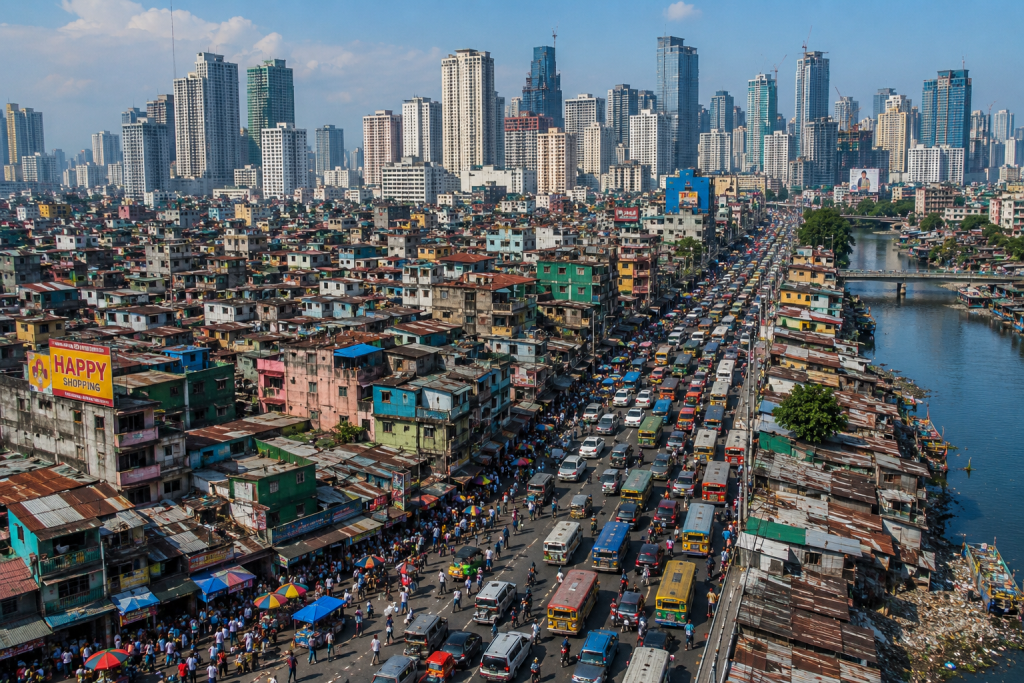
Manila is one of the world’s most densely populated urban area. The 25 million plus people living in the metropolitan area of Manila are spread over 620 square kilometers of urban land. This translates into an incredible 43,000 plus people per square kilometer in many areas of the city. With the housing, transport, sanitation and general public services of the city under severe pressure from the huge numbers of people, Manila remains one of the economic and commercial centers of Southeast Asia.
2. Dhaka, Bangladesh
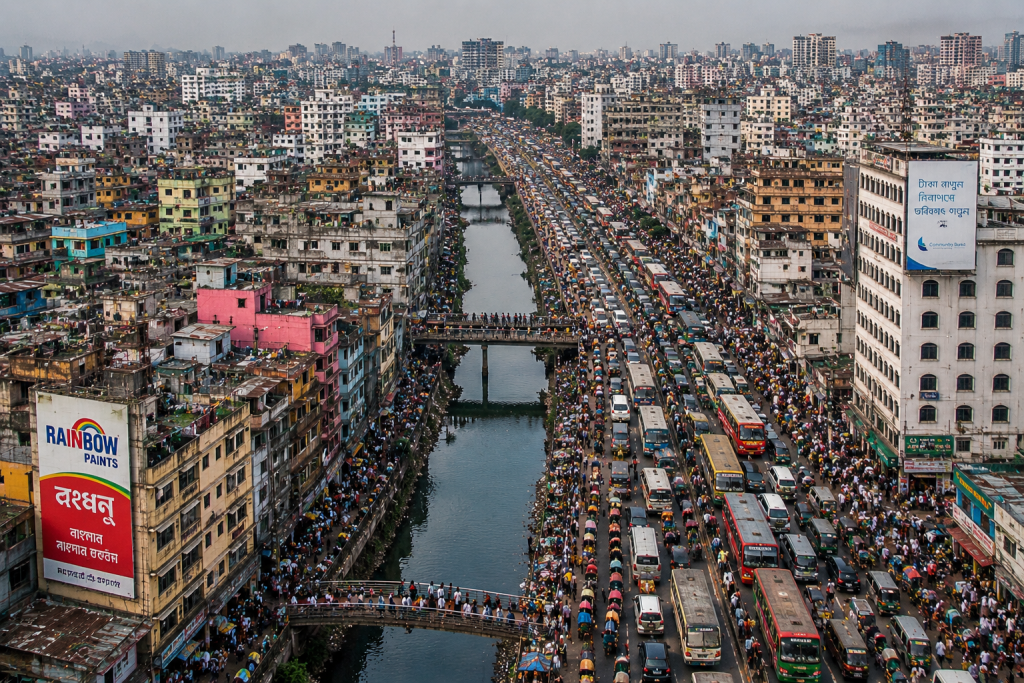
Dhaka is rapidly becoming one of the world’s fastest-growing urban areas. Home to around 24 million people within the metropolitan region, Dhaka’s urban area spans approximately 815 sq km, with some of the very densest population found in the city center where 30,000 plus people per sq km can be found. Rapid development of industry and the growth of economic opportunity within rural areas has led to mass migration into the city and those affected by climate change in rural areas seek a new home in Dhaka. Constrained by increasing traffic, squeezed for space to live, the urban dweller of Dhaka suffers from polluted air and lack of effective provision for water. All these elements are a challenge to Dhaka as the capital city of Bangladesh and require careful management.
3. Mumbai, India
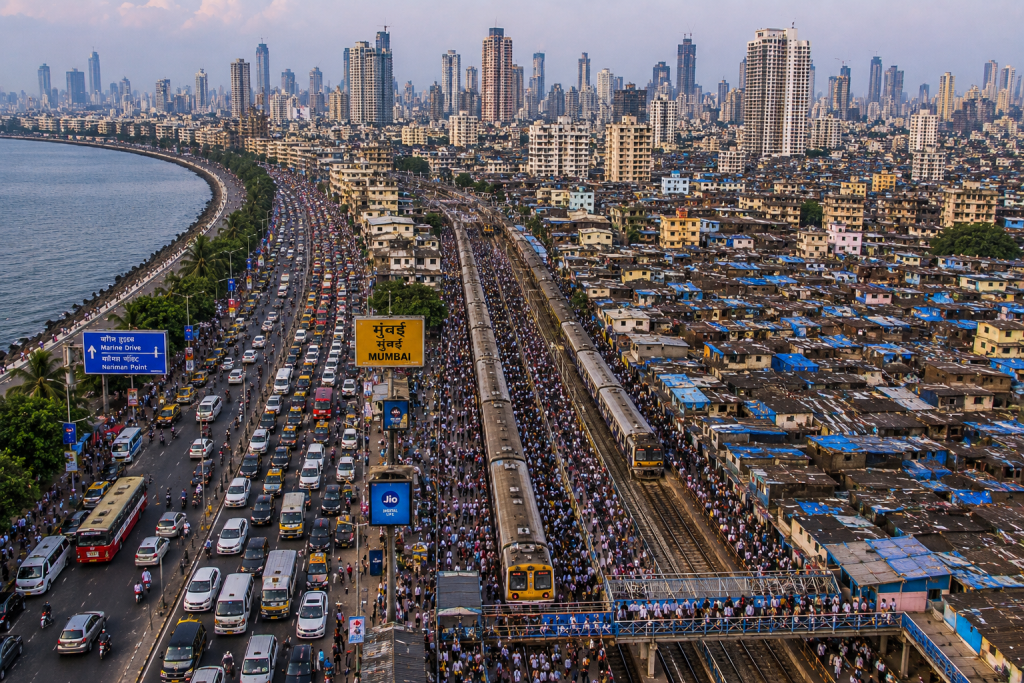
Mumbai is one of the world’s most densely populated mega cities with a metropolitan population of over 22 million people and a core urban area of 603 sq km. Some of the areas in Mumbai even have a population density of more than 25,000 people per sq km. The financial capital of India, Mumbai attracts millions of migrant workers in search of employment and better life. With limited land, high real estate prices, crowded public transport and densely stacked residential buildings, Mumbai’s urban environment is unique to many parts of the world.
4. Kolkata, India
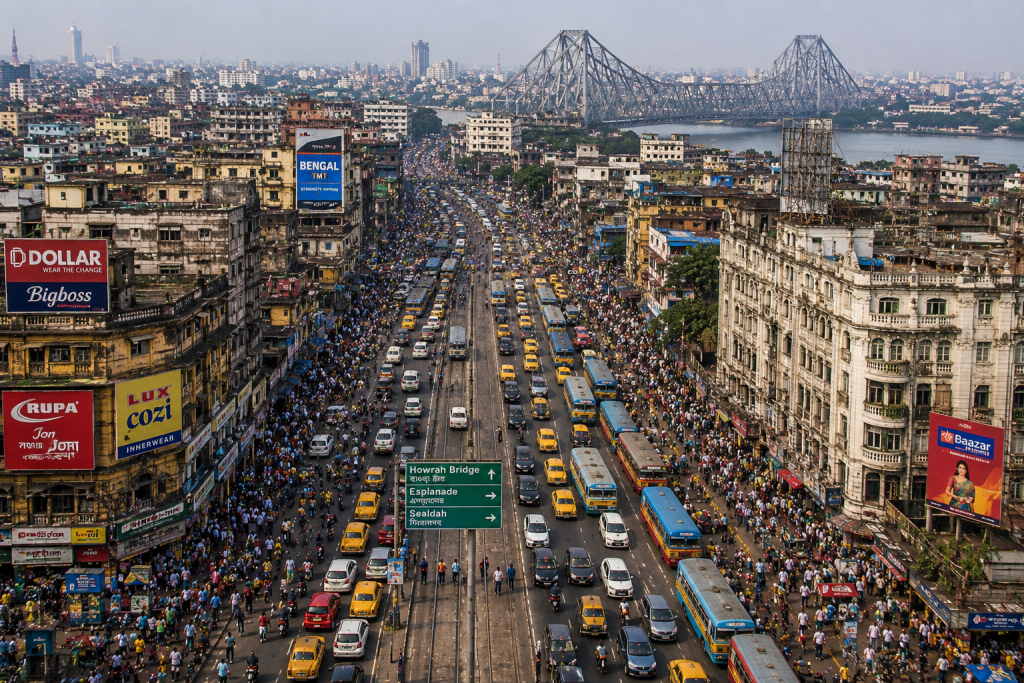
Kolkata, once the capital of British India, today is one of the most densely populated areas in the country. Home to a massive population of 15 million+ people across 530 sq. km, the population density in several of the city’s districts is above 24,000 people/sq.km. Many of the heritage areas from centuries past continue to remain over crowded. The gridlocked roads, decades of unrelenting population growth and poor infrastructure to support it, the city has drawn in large numbers of people from eastern India, and indeed from other parts of the country in pursuit of better educational and career opportunities.
5. Karachi, Pakistan
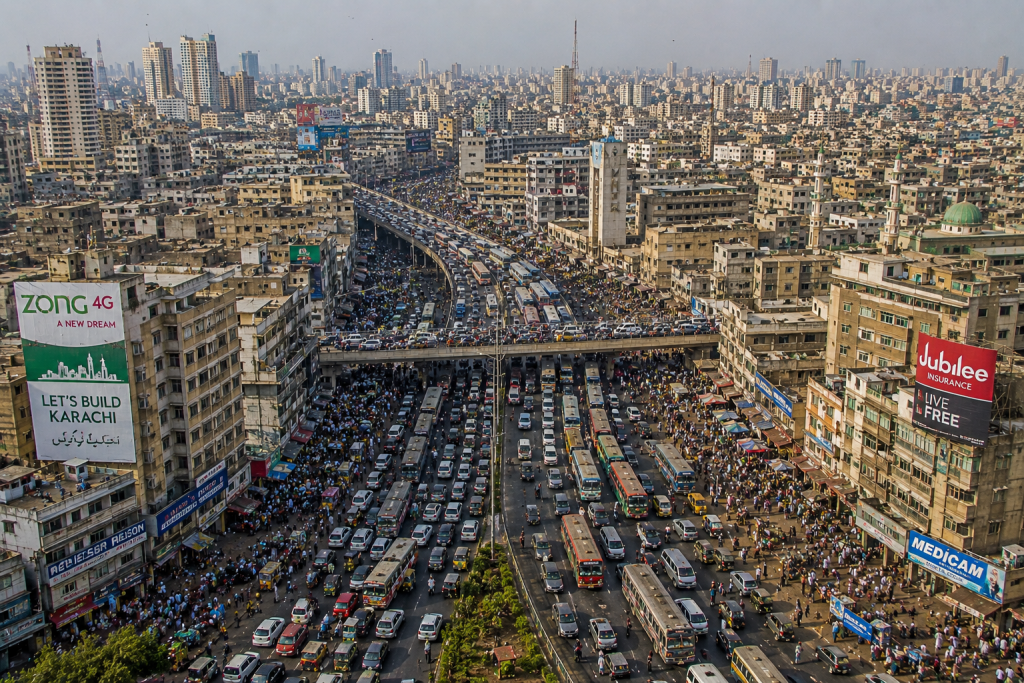
Karachi is Pakistan’s largest city, it is also one of the world’s largest urban centers. Home to over 20 million people the city’s surface area is approximately 850 square kilometers. In several parts of the city, the population density exceeds 23,000 people per square kilometer. Over the last few decades Pakistan’s sudden increase in population has created a mass exodus of people traveling to the city in search of better housing, facilities and employment opportunities. As a result, the city is experiencing extreme levels of traffic congestion, a lack of water, severe pollution and put a strain on current housing and public services.
6. Lagos, Nigeria
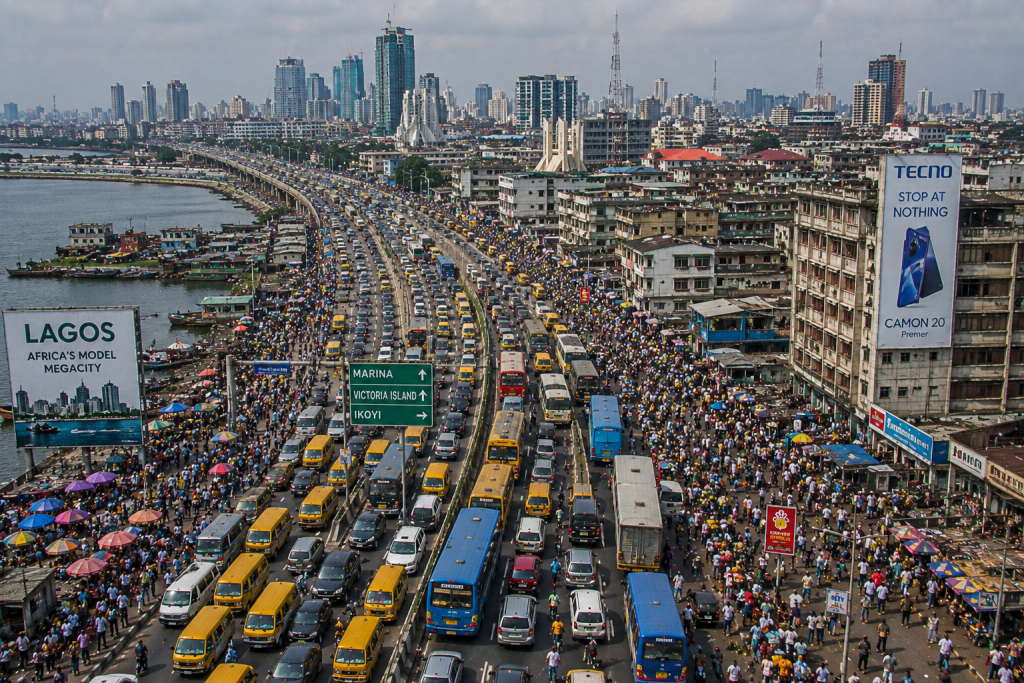
Lagos is Africa’s largest urban center and one of the fastest growing cities world wide. The metropolitan region is home to a massive 21 million plus people within a mere 1,170 square kilometers. Many urban districts within Lagos have population density of over 20,000 people per square kilometer, bringing immense pressure on transportation, housing, utilities and sanitation. Lagos is the economic and commercial capital of Nigeria.
7. Cairo, Egypt
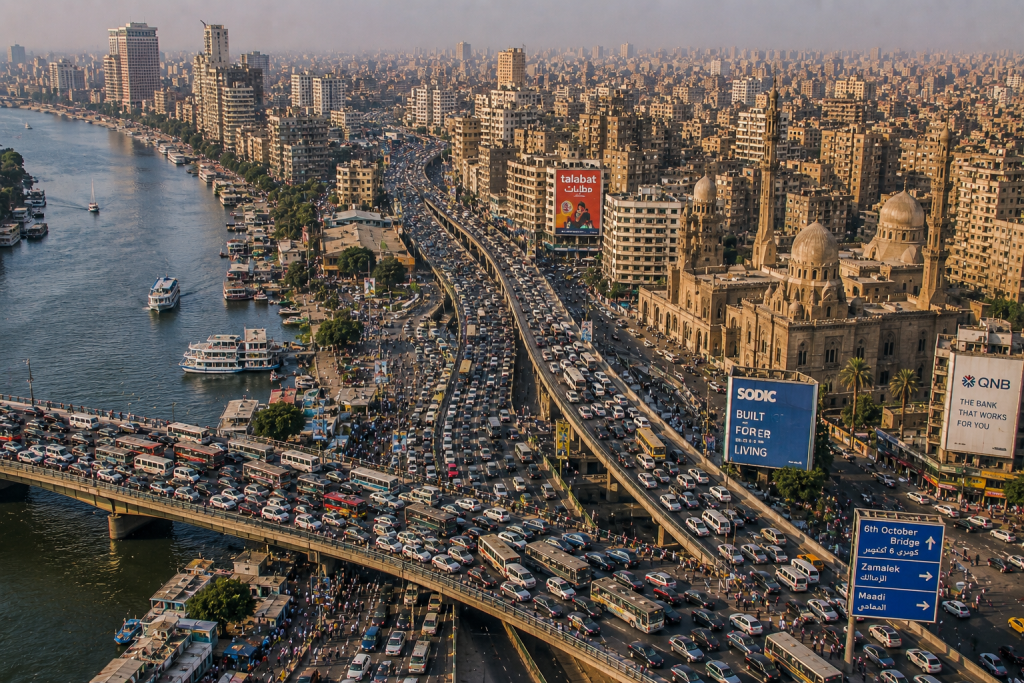
Cairo, one of the most densely populated cities in the Middle East and Africa, is home to a metropolitan population of 22 million plus people. The majority of the population live along the Nile River in a band of approximately 1,200 square kilometers in the heart of Africa and the Middle East. In central Cairo the population density can reach as high as 19,000 people per square kilometer and while traffic congestion, the inability of infrastructure to support the growing population and the increasing demand for housing within the city are key challenges currently facing the capital, the government is also developing several new urban centers outside of the city in an attempt to alleviate some of the pressure on the city center.
8. Delhi, India
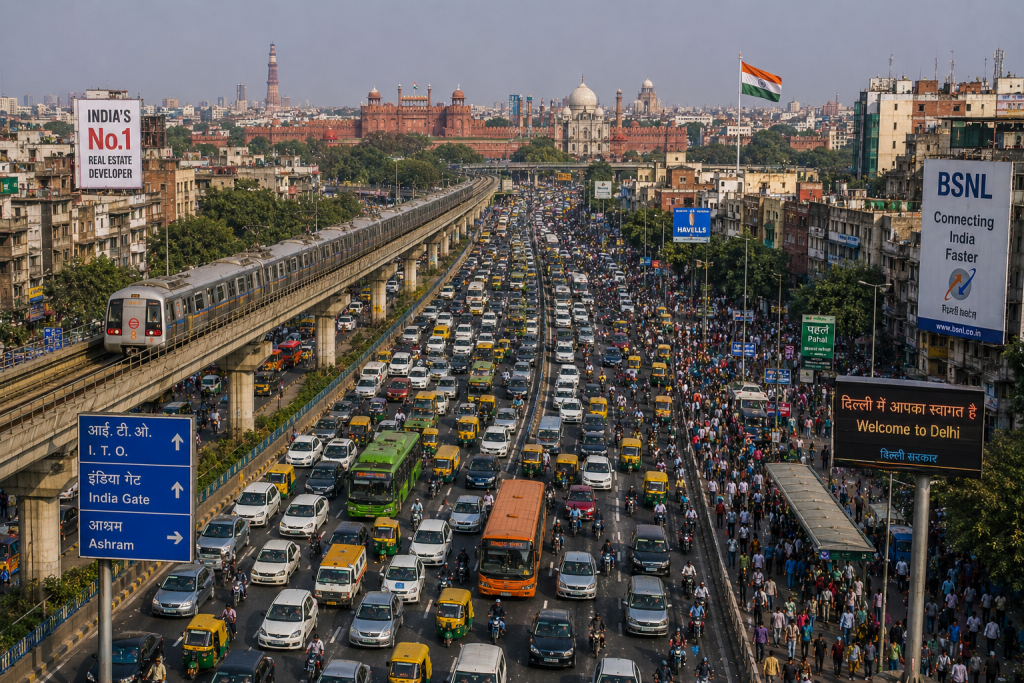
Delhi, one of the world’s largest metropolitan areas, is home to 33 million+ people across a mere 1,484 square kilometers. Parts of the city are so densely populated that they contain over 18,000 people per square kilometer of land. A great deal of this growth is due to the steady stream of migrants to the city, as well as outward growth of suburbs and economic development of other regions within the city. The second most populous country in the world, India, is where the capital city is located, and it remains one of the country’s economic and political hubs. Despite all of this, however, the city struggles with many serious problems including traffic, pollution, water shortages and a massive housing demand.
9. Seoul, South Korea
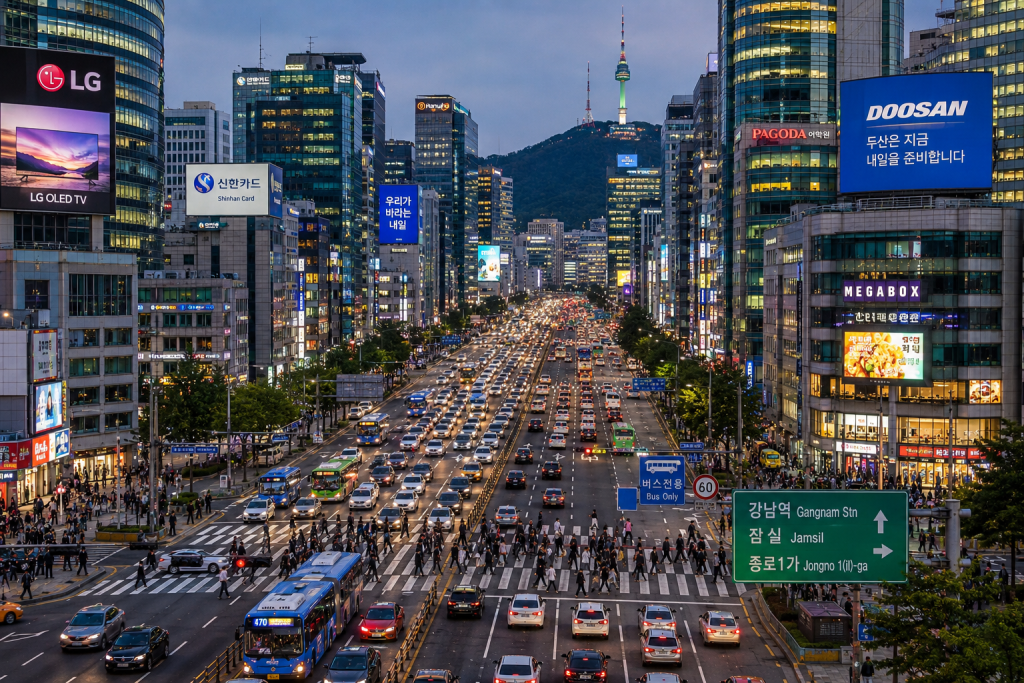
Seoul is the world’s most technologically advanced city and is also one of the most densely populated. With the Seoul metropolitan area home to nearly 26 million people and covering a total area of around 605 square kilometers, the urban area itself covers just 605 square kilometers. The population density of many districts in the city is even higher than 16,000 people per square kilometer. In spite of the country’s slowly declining population, the city’s strong economy, first class infrastructure and cutting-edge city life continues to attract people from all over the world. Many of the city’s residential properties are in high-rise buildings, and the city also has an extremely efficient public-transportation system that is capable of supporting the city’s high population density.
10. Tokyo, Japan
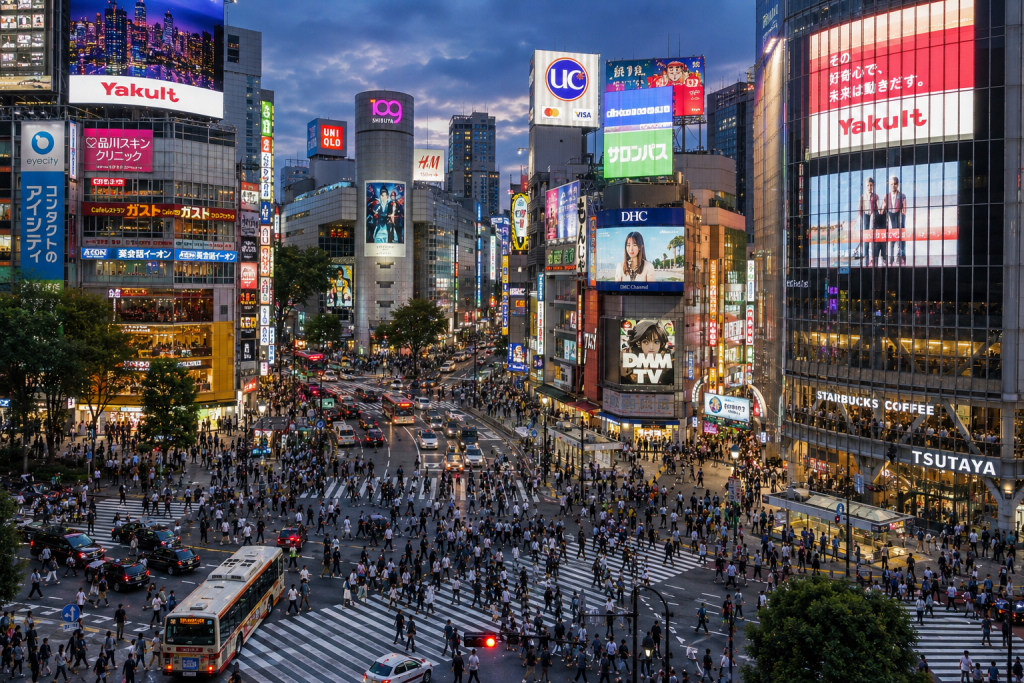
Tokyo is still as crowded as ever as one of the world’s leading metropolitan cities. As one of the world’s leading cities, the Tokyo metropolitan area is home to a massive 37 million people covering a mere 2,194 square kilometers. One of the world’s most densely populated districts of Central Tokyo boasts an impressive 15,000 people or more per square kilometer. The overall Japanese population is slowly decreasing; however, millions are flocking to the capital city of Tokyo to seek further opportunity. The advanced transport links, top quality education, and the best in urban infrastructure of Tokyo draws in millions of people worldwide.
Why Are Cities Becoming So Crowded?
Several major factors are driving urban growth worldwide.
Rural-to-Urban Migration
Rural-to-Urban Migration: Many people, especially from developing economies in Asia and Africa, are moving from rural areas to cities every year. They are flocking to these areas in search of better employment, quality education, health services, and generally a higher standard of living.
Economic Opportunities
A concentration of industries such as manufacturing, hi-tech, finance, education and transportation within a city creates the highest wage opportunities in comparison to other town and rural locations.
Infrastructure and Services
This variety of services and opportunities in large cities such as hospitals, schools, Internet connections and public transport also attracts a stream of foreign and local workers and thus new residents.
Population Growth
Higher than average birth rates in many of the developing countries of Asia and Africa also add to the population in the urban areas of these countries.
Problems Faced by Crowded Cities
While the megacities can support their economic growth, numerous challenges in traffic, housing, environmental and water management have to be overcome.
Traffic Congestion
Traffic congestion is one of the problems that many of the most crowded cities are facing. In some cases, the hours spent in traffic jams by the residents of a city can even total hundreds of hours per year.
Housing Shortages
Rapid urban growth results in housing shortages and puts pressure on the housing market. In consequence, there is an increase of housing rents, of so-called informal settlements and of over-crowded housing.
Pollution
In many of the world’s largest cities – especially in Asia – there is still plenty of work to be done to reduce air pollution, mainly emitted by industry, vehicles and construction.
Water Stress
A large number of the world’s biggest cities are facing water shortages and water stress. Their supply of water is not meeting the demand.
Climate Risks
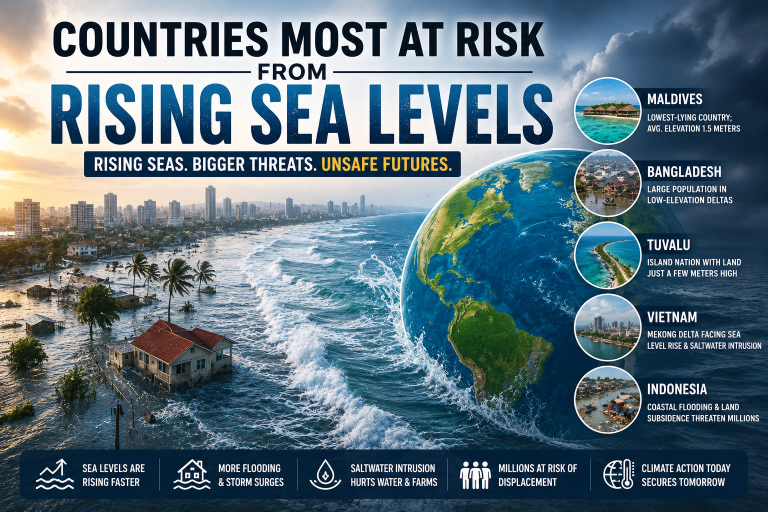
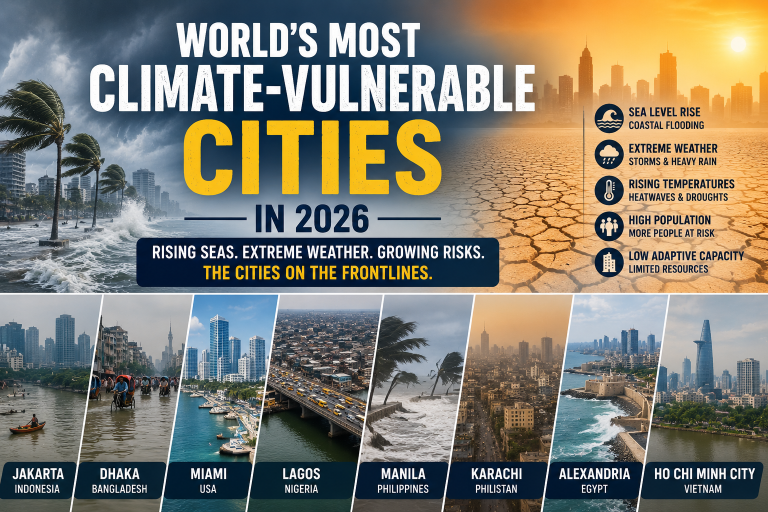
Most of the world’s largest cities are exposed to flooding, sea level rise, heat stress and land subsidence. In some cases, for instance in Jakarta, even more global climate changes are putting increased pressure on already fragile urban environments.
The Future of Urbanization
Urbanization is set to continue to shape our world in the decades to come. According to the United Nations by 2050 2.5 billion people are expected to move to cities with most growth taking place in Asia and Africa.
Future megacities will rely on structures of sustainable infrastructure and of transportation as well as on smart-city technologies, on renewable energy and on adaption to climate. As a result, cities all over the world are being equipped with metro systems, with green buildings as well as with flood protection and with modern urban planning. The investment in these issues is increasing with the size of a city’s population.
P.S.
These are the world’s most crowded cities in 2026. The world is experiencing unprecedented levels of urbanization and these are the economic engines of the globe that are attracting millions of people to cities such as Jakarta, Dhaka, Tokyo, Delhi and Shanghai in search of work and better lives. However, these megacities are facing up to the strain that their ever-increasing populations are putting on their housing, climate, air quality and overall infrastructure.
The future of these very crowded cities will depend on how their governments deal with the challenges of sustainable development, of transport, of environmental protection and of the quality of life of the citizens in these cities.